MIWAI'2014
The 8th Multi-Disciplinary International Workshop on Artificial Intelligence


 1
 2
 3
 4
 5
 6
 7
- Home

- Call for Papers
- Committees
- Submission
- Technical Programme
- Speakers
- Tutorials
- Accepted Papers
- Registration
- Venue & Accommodation
- Sponsors
- Contacts
- Location
Publication
 Proceedings of MIWAI 2014 will be published in Springer LNAI series.
Flags Counter started on April 25, 2014
MIWAI 2014 Tutorial/Workshop Schedule download here.
Multi-disciplinary International Workshop on Artificial Intelligence(MIWAI-2014)
|
||
|---|---|---|
| 8th December 2014 | ||
| 8:30 A.M to 9:30 A.M: | Registration | |
| 9:30 A.M to 11:00 A.M: |
Tutorial-1 [Part I] Speaker: Dr. Chattrakul Sombattheera, Mahasarakham University, Thailand Title: Introduction to Coalition Formation Chair: TBD |
|
| 11:00 A.M to 11:30 A.M: | Tea Break | |
| 11:30 A.M to 01:00 0P.M: |
Tutorial-1 [Part II] Speaker: Dr. Chattrakul Sombattheera, Mahasarakham University, Thailand Title: Introduction to Coalition Formation Chair: TBD |
|
| 1:00P.M to 2:00 P.M: | Lunch Break | |
| 2:00 P.M to 03:30 P.M: |
Tutorial-2 [Part I] Speaker: Prof. P. Krishna Reddy, IIIT Hyderabad Title: "Building of eSagu System", an IT-based Personalized Agro-Advisory system. Chair: TBD |
|
| 03:30 P.M to 04:00 P.M: | Tea Break | |
| 04:00 P.M to 05:30 P.M: |
Tutorial-2 [Part II] Speaker: Prof. P. Krishna Reddy, IIIT Hyderabad Title: "Building of eSagu System", an IT-based Personalized Agro-Advisory system. Chair: TBD |
|
| 9th December 2014 | ||
| 8:00 A.M to 9:30 A.M: | Registration | |
| 9:30 A.M to 10 A.M: | Inauguration ceremony | |
| 10:00 A.M to 11:00 A.M: |
Keynote Talk: Prof. C. A. Murthy, ISI Kolkata Title: Face Recognition using Set Estimation Procedure Chair: Prof. Y. Narahari, IISc Bangalore |
|
| 11:00 A.M to 11:30 A.M: | Tea Break | |
| 11:30 A.M to 1:00 P.M: |
Technical Session-1: Evolutionary Computing and Others-I Session Chair: TBD
|
|
| 1:00P.M to 2:00 P.M: | Lunch Break | |
| 2:00 P.M to 3:00 P.M: |
Invited Talk-1: Prof. P. S. Sastry, IISc Bangalore Title: Learning classifiers under label noise Chair: TBD |
|
| 3:00 P.M to 4:00 P.M: |
Technical Session-2: Evolutionary Computing and Others-II Session Chair: TBD
|
|
| 4:00 P.M to 4:30 P.M | Tea Break | |
| 4:30 P.M to 5:30 P.M: |
Technical Session-3: Soft Computing –I Session Chair: TBD
|
|
| 7:00 P.M to 10:00 P.M: | Cultural Programme and Workshop Banquet Dinner Venue: The Capitol Hotel | |
| 10th December 2014 | ||
| 9:00 A.M to 10:00 A.M: |
Invited Talk-2: Prof. B. S. Daya Sagar, ISI, Bangalore Title: Greyscale Morphological Interpolations and Morphing Chair: TBD |
|
| 10:00 A.M to 11:00 A.M: |
Technical Session-4: Soft-Computing-II Session Chair: TBD
|
|
| 11:00 A.M to 11:30 A.M: | Tea Break | |
| 11:30 A.M to 1:00 P.M: |
Technical Session-5: DM/ML Session Chair: TBD
|
|
| 1:00 P.M to 2:00 P.M: | Lunch Break | |
| 2:00 PM to 3:00 PM: |
Invited Talk-3: Dr. Biplav Srivastava, IBM Research, New Delhi Title: Open Innovation - From Government Open Data to Societal Applications that Matter Chair: TBD |
|
| 3:00 P.M to 4:40 P.M: |
Technical Session-6: Web/NW Session Chair: TBD
|
|
| 4:40 P.M to 5:00 P.M: | Tea Break | |
| 5:00 P.M to 5:30 P.M: | Valedictory | |
Prof. C. A. Murthy (Keynote Speaker)
 |
Prof. C. A. Murthy Machine Intelligence Unitarianize Indian Statistical Institute 203 Barrackpore Trunk Road Kolkata - 700 108 India Email: murthy@isical.ac.in http://www.isical.ac.in/~murthy/ More... |
Brief Biography: Professor C. A. Murthy was born in Ongole, India in 1958. He obtained B. Stat (Hons), M. Stat. and Ph. D. degrees from the Indian Statistical Institute (ISI). He visited the Michigan State University, East Lansing in 1991-92 and the Pennsylvania State University, University Park in 1996 - 97. He is a Professor in the Machine Intelligence Unit of ISI. His fields of research interest include Pattern Recognition, Image Processing, Machine Learning, Neural Networks, Fractals, Genetic Algorithms, Wavelets and Data Mining. He received the best paper award in 1996 in Computer Science from the Institute of Engineers, India. He received the Vasvik award along with his two colleagues for Electronic Sciences and Technology for the year 1999. He is a fellow of the National Academy of Engineering, India and National Academy of Sciences, India. He was the head of the Machine Intelligence Unit, ISI from 2005 to 2010.
He has 6 US Patents, 2 EU Patents and 2 International Patents for his works on Image retrieval using distance measure, Architecture for processing fingerprint images, Finger print minutiae Matching using Scoring Techniques, A method for block based digital image watermarking' etc. He has published quality papers in select top journals like: Computer Vision and Image Understanding, IEEE Trans. on Pattern Analysis and Machine Intelligence, IEEE Trans. on Image Processing, IEEE Trans. on Systems, Man, and Cybernetics-B, Pattern Recognition, IEEE Transactions on Neural Networks etc. He has also edited 4 books.
He is presently the Professor In-charge of the Computer and Communication Sciences Division of ISI.
Title: Face Recognition using Set Estimation Procedure
Abstract: Most of the conventional face recognition algorithms are dissimilarity based, and for the sake of open and closed test classification one needs to put a proper threshold on the dissimilarity value. On the basis of the decision threshold, a biometric recognition system should be in a position to accept the query image as client or reject him as imposter. However, the selection of proper threshold of a given class in a dataset is an open question, as it is related to the difficulty levels dictated in face recognition problems. In this talk we shall describe a thresholding technique for a real life scenario where the query face image may not be present in the training database, i.e. often referred by the biometric researchers as the open test identification. The theoretical basis of the thresholding technique and its corresponding verification on several datasets has been successfully demonstrated here. The proposed threshold selection is based on statistical method of set estimation and is guided by minimal spanning tree. It has been found that the proposed technique performs better than the ROC curve based threshold selection mechanism.
Prof. P. S. Sastry (Invited Speaker)
 |
Prof. P. S. Sastry Room No 235 Department of Electrical Engineering Indian Institute of Science Bangalore-560012 India Email: sastry@ee.iisc.ernet.in http://minchu.ee.iisc.ernet.in/new/people/faculty/pss/ More... |
Brief Biography: Professor P.S Sastry received B.Sc.(Hons.) in Physics from IIT, Kharagpur, in 1978 and B.E. in Electrical Communications Engineering and Ph.D. from Department of Electrical Engineering, from IISc, Bangalore in 1981 and 1985 respectively. Since 1986, he has been a faculty member in the department of Electrical Engineering, Indian Institute of Science, Bangalore, where currently he is a professor. He has held visiting positions at University of Massachusetts, Amherst, University of Michigan, Ann Arbor and General Motors Research Labs, Warren, USA. He is an Associate Editor of IEEE Transactions on Systems, Man and Cybernetics since 2001 and IEEE Transactions on Automation Science and Engineering (2007-10). He is a recipient of Sir C.V.Raman Young Scientist award, from Govt of Karnataka, Hari Om Ashram Dr. Vikram Sarabhai research award from PRL and Most Valued Colleague award from General Motors Corporation. He is a Fellow of Indian National Academy of Engineering and a Senior Member of IEEE. He has around 45 high quality publications. He also has 3 patents to his credit. His research interests include Machine Learning, Pattern Recognition, Data Mining and Computational Neuroscience.
Title: Learning classifiers under label noise
Abstract: Supervised learning of pattern classifiers is a basic problem in Machine Learning. One uses a training set of patterns vectors with known class labels for learning the classifier. In many applications the labels provided for the training patterns may be incorrect and this is termed as label noise. This problem is important in many applications today where the labels may have been obtained through, e.g., crowd sourcing. Obviously it is desirable to have learning algorithms that can learn good classifiers even though the training set may be corrupted with label noise. Many approaches have been proposed for identifying and/or guarding against training examples with noisy labels. In the first part of this talk we will review some of the approaches based on heuristics and also some of the recent approaches that are based on some interesting statistical principles. In the second part of the talk we concentrate of one generic approach to classifier learning, namely, risk minimization. We present some of our recent results on making risk minimization robust to label noise. We consider the cases of both uniform and non-uniform label noise. In the uniform noise case, the probability of class label being incorrect is same for all feature vectors while under the non-uniform label noise, the probability of the class label being incorrect can be a function of the feature vector. We present some sufficient conditions on the loss function that would make risk minimization robust to label noise. While none of the popular convex loss functions such as the hinge loss (which is used in SVM), the exponential loss (which is used in AdaBoost) etc. satisfy the sufficient conditions, we show that ramp loss, sigmoid loss and the 0-1 loss satisfy the sufficient condition. We also discuss some algorithmic issues in minimizing empirical risk under the noise-robust loss functions. We present some empirical results that demonstrate the relevance of these theoretical results.
Dr. B. S. Daya Sagar (Invited Speaker)
 |
Dr. B. S. Daya Sagar Associate Professor & Head Systems Science and Informatics Unit (SSIU) Indian Statistical Institute--Bangalore Centre 8th Mile, Mysore Road, R. V. College P.O Bangalore-560059 India Email: bsdsagar@isibang.ac.in http://www.isibang.ac.in/~bsdsagar/ More... |
Brief Biography: Dr. B. S. Daya Sagar (M’03-SM’03) received the M.Sc and Ph.D degrees from the Faculty of Engineering, Andhra University, Visakhapatnam, India, in 1991 and 1994 respectively. Sagar currently is an Associate Professor at Systems Science and Informatics Unit (SSIU) of Indian Statistical Institute—Bangalore Centre, India. Earlier, he worked in College of Engineering, Andhra University, and Centre for Remote Imaging Sensing and Processing (CRISP), The National University of Singapore in various positions during 1992-2001. He served as Associate Professor and Researcher in the Faculty of Engineering & Technology, Multimedia University, Malaysia during 2001-07. His research interests include GIS, Applications of Mathematical Morphology, digital image processing, fractals and multifractals in extraction, analyses, and modeling of geophysical patterns. He has published over 60 papers in journals, and has authored and/or guest edited 9 book and/or theme issues for journals. He authored a book entitled "Mathematical Morphology in Geomorphology and GISci," CRC Press: Boca Raton, 2013, p. 546. He recently co-edited a special issue on "Filtering and Segmentation with Mathematical Morphology" for IEEE Journal on Selected Topics in Signal Processing (v. 6, no. 7, p. 737-886, 2012). He is an elected Fellow of Royal Geographical Society (1999), Indian Geophysical Union (2011), and was a member of New York Academy of Science during 1995-96, and He received first Dr. Balakrishna Memorial Award from Andhra Pradesh Akademi of Sciences in 1995, Krishnan Gold Medal from Indian Geophysical Union in 2002, and ‘Georges Matheron Award-2011 (with Lecturership)” of International Association for Mathematical Geosciences. He is on the Editorial Boards of Discrete Dynamics of Nature and Society, and Computers & Geosciences. More details about him can be seen at: http://www.isibang.ac.in/~bsdsagar
Title: Greyscale Morphological Interpolations and Morphing
Abstract: We demonstrate the application of greyscale morphological interpolations, computed hierarchically between the spatial fields, to metamorphose a source-spatial field into a target-spatial fields. Greyscale morphological interpolations are computed with respect to both flat and non-flat structuring elements, and found that the morphing, shown for transform source-DEM into target-DEM, created with respect to non-flat structuring element is more appropriate as the transition of source-DEM into the target-DEM across discrete time steps is smoother than that of the morphing shown with respect to flat structuring element. This morphing shown via nonlinear greyscale morphological interpolations is of immense value in geographical information science, and in particular spatiotemporal geo-visualization. Two DEMs of similar sizes but belonging to two different regions are considered as source and target spatial fields further to (i) demonstrate morphology-based algorithm to generate all possible sequential median functions, and (ii) create morphing depicting source-DEM transforming into target-DEM. Application of this entire framework yields results of interest particularly in visualization of spatiotemporal behaviours of various phenomena drawn from wide ranging disciplines such as geosciences, environmental sciences, geography, demography, agricultural sciences, social sciences, etc.
Dr. Biplav Srivastava (Invited Speaker)
 |
Dr. Biplav Srivastava Senior Researcher, IBM Master Inventor IBM Research, ISID Campus, Plot No. 4, Block C, Institutional Area, Vasant Kunj New Delhi - 110 070 India Email: sbiplav@in.ibm.com http://www.research.ibm.com/people/b/biplav/ More... |
Brief Biography: Dr. Biplav Srivastava, Senior Researcher & Master Inventor, IBM Research and an ACM Senior Member and Distinguished Speaker, is based out of New Delhi, India. He received his B.Tech. (Computer Science & Engg.), Indian Institute of Technology, B.H.U., India in 1993, M.S. (Computer Science), Arizona State University, Tempe, USA in 1996 and Ph.D. (Computer Science), Arizona State University, Tempe, USA in 2000. His research deals with enabling people to make rational decisions despite real world complexities of poor data, changing goals and limited resources. His current focus is on open data, APIs and analytics, and their real world usage in enterprise integration. His expertise is in Artificial Intelligence, Services and Sustainability, and has over 18 years of experience, primarily in research, working with collaborators and customers around the world, resulting in many science firsts and commercial innovations, 100+ papers and 30 US patents issued. Biplav actively participates in professional services globally including running the 'AI in India' virtual Google group with 75+ members over the last 4 years (https://groups.google.com/forum/#!forum/ai-in-india ), organizing conference tracks, workshops and as a Program Committee member for more than 50 events.
Title: Open Innovation - From Government Open Data to Societal Applications that Matter
Abstract: State-of-the-art Artificial Intelligence (AI) and data management techniques have been demonstrated to process large volumes of noisy data to extract meaningful patterns and drive decisions in diverse applications ranging from space exploration (NASA's Curiosity), game shows (IBM's Watson in Jeopardy™ ) and even consumer products (Apple's SIRI™ voice-recognition). However, what stops them from helping us in more mundane things like fighting diseases, commuting to work, or reducing financial frauds? Data.
In this talk, I will discuss how one type of data, i.e., government open data which is from governments and free to be reused, can be productively used to drive day-to-day applications that bring about social change. I call the trend as "open innovations" - a confluence of open data (e.g., Data.gov, data.gov.in) and analytical techniques that are accessible over the web via open APIs with semantics (e.g., Open 311). We will illustrate how this can help bring increased benefits to citizens and reduce corruption in public services and discuss research issues that can accelerate its pace.
Dr. P. Krishna Reddy (Tutorial Speaker)
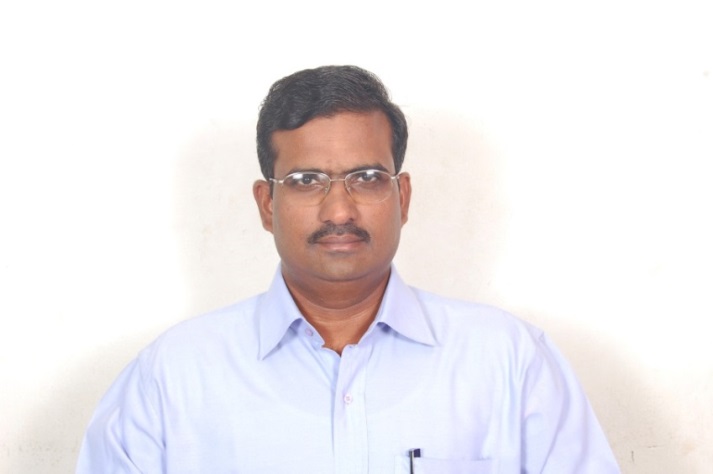 |
Dr P.Krishna Reddy Program Director, ITRA Agriculture & Food, DietY, Govt. of India and Professor International Institute of Information Technology Hyderabad (IIIT-H) Gachibowli, Hyderabad, Telangana State 500032 India E-mail: pkreddy@iiit.ac.in http://www.iiit.ac.in/~pkreddy/ More... |
Brief Biography: Professor P. Krishna Reddy is at Center for Data Engineering, International Institute of Information Technology Hyderabad (IIIT-H), Hyderabad, India, since 2007. Since November 2013, he is also serving as a Program Director, ITRA-Agriculture & Food, Information Technology Research Academy (ITRA), Division of Media Lab Asia, Ministry of Communications & IT, Government of India. He has worked as an associate professor at the same university from 2002 to 2006. From 1997 to 2002, he was a research associate at the Center for Conceptual Information Processing Research, Institute of Industrial Science, University of Tokyo. From 1994 to 1996, he worked as a faculty member at the Division of Computer Engineering, Netaji Subhas Institute of Technology, Delhi. During the summer of 2003, he was a visiting researcher at Institute for Software Research International, School of Computer Science, Carnegie Mellon University, Pittsburg, USA. He has received both MTech and PhD degrees in computer science from Jawaharlal Nehru University, New Delhi in 1991 and 1994, respectively. His research interests include data mining, web mining, data management, transaction models, distributed computing, and ICTs for agriculture. He has published about 100 refereed research papers which include 14 journal papers and three book chapters. He has delivered several invited/panel talks at the reputed conferences and workshops in India and abroad. He was a proceedings chair of COMAD 2008 and a workshop chair of KDRS 2010. He has organized the 14th Pacific-Asia Conference on Knowledge Discovery and Data Mining (PAKDD2010) in Hyderabad, India. He has got several awards and recognitions. He is a steering committee member of pacific-asia data mining conference series since 2010. Since 2004, he has been investigating the building of eSagu system, which is an IT-based Personalized Agro-Advisory system, to provide scientific agricultural information to farming community. The eSagu system has got several recognitions including CSI-Nihilent e-Governance Project Award in 2006 and Manthan Award in 2008. In addition to eSagu system, since 2010, he is investigating the building of eAgromet system which is an ICT-based agro-meteorological advisory system to provide risk mitigation information to farmers with the funding support from Indian Meteorological Department, Ministry of Earth Sciences.
Title: Building Information/Knowledge Based Decision Support Systems for Better Agriculture.
Abstract: The eSagu system is a personalized agro-advisory system. In eSagu, the expert advice is generated by agricultural experts based on the latest information about the crop situation received in the form of both digital photographs and corresponding feedback text. Several impact studies reported that the farmers have realized considerable monetary benefits by reducing the quantity of fertilizer application, pesticide sprays, besides getting the additional yield. By considering village as a unit, we have developed a scalable and cost-effective system which can deliver location-specific agricultural advices in a regular manner throughout the year. The technology can bring next agriculture revolution as it aims to help every farmer of India, including poor and marginal farmers.
The eAgromet system is an IT-based agro-meteorological advisory system. The India Meteorological Department is disseminating agromet advisory bulletins, which contain possible weather related risk mitigation measures, to farmers and other stakeholders through about 130 Agro Meteorological Field Units (AMFUs). We are building an eAgromet system to improve the efficiency of preparing agromet advisory bulletins. The system is built and it is operational.
The notion of virtual crop labs is conceptualized to improve practical field skills of agriculture students/scientists. It can be noted that the crop husbandry problems vary from year to year and place to place due to temporal and spatial variability of the region/country. In spite of significant efforts, there is a feeling that the level of practical skills exposed to the students is not up to the desired level. The practical knowledge of students could be improved, if we systematically expose them to virtual crop lab content with well organized, indexed and summarized digital data (text, digital photos and video) of diverse farm situations along with course teaching.
With the preceding background, I am planning to offer a tutorial to excite the participants to conceive data/knowledge based decision support systems for better agriculture. The outline of the tutorial is as follows: Introduction and background, Problems in agriculture, opportunities provided by the advances in data and knowledge sciences, Case studies of eSagu, eAgromet and Virtual Crop Labs, Data and knowledge based systems in India and abroad, Opportunities to build data and knowledge based decision support systems in agriculture.
Dr. Chattrakul Sombattheera (Tutorial Speaker)
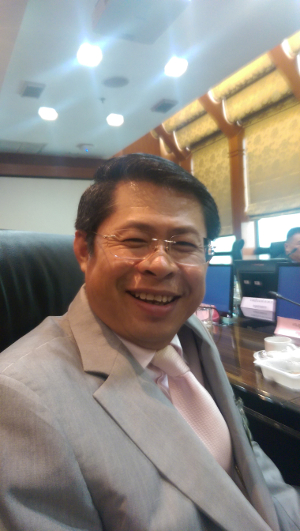 |
Dr. Chattrakul Sombattheera Faculty of Informatics Mahasarakham University Khamreang Sub-District Kantarawichai District Maha Sarakham 44150 Thailand Email: chattrakul.s@msu.ac.th More... |
Brief Biography: Dr. Sombattheera received his Bachelor of Computer Science from Ramkhamhaeng University, Thailand in 1992. He spent three years working for Control Data Thailand maintaining the AFFIS (Automatic Face and Fingerprint Identification System) project of the Ministry of Interior of Thailand. In 1995, he began his long journey in Australia. He obtained a Graduate Diploma in Computer Science from the University of Western Australia in 1996 and Master of Information Technology in 1998 from The University of Sydney. After that, he worked as a business developer for a couple of companies in Sydney, including Alstom IT. In 2001, the wind of change blew him back to Thailand where became a lecturer at Mahasarakham University—a place near his hometown—and holds his affiliation there ever since. In 2003, he headed back to Australia for his PhD at the University of Wollongong in NSW. His thesis focuses on optimal coalition structure, an important area of multiagent systems, and its application to real world problems. Since his return to Mahasarakham in 2008, he has done both administrative and academic works. In administration, he was appointed as Assistant Dean and Associate Dean for research and international relation. In academic work, he has founded the Multiagent and Intelligent Systems Laboratory (MISL). He and his group have won many research grants from both government agencies and companies in multiple industries. The most recent projects are in defense industry where multiagent systems are very important and useful.
Title: Introduction to Coalition Formation
Abstract: Coalition formation is an important area of research in multiagent systems because it can efficiently handle complexity of problems in the real world. It addresses underpinning theories, known as solution concepts, which bring about stable states to the system. While the complexity of the real world problem has been consistently increasing, classical centralized techniques fall short of ability to handle them. Coalition formation offers distributed approaches, which leverage individual abilities of agents in the system and combine them to unleash the unprecedented power to help solve the complex problems efficiently. In this tutorial, I will cover three classical solution concepts in coalition formation, namely, kernel, the core, and Shapley value. Then, I will show, in my research, how these solution concepts can be applied to handle complexity in real world problems.